
Articles about high blood calcium, what it can mean, and when it may point to primary hyperparathyroidism. These posts are written to help patients understand common causes, next steps, and when further evaluation may be needed.

How Do You Know If High Calcium Is Coming From a Parathyroid Problem?

When a blood test shows a high calcium level, one of the first questions is what is causing it. In many cases, the answer is a parathyroid problem, specifically primary hyperparathyroidism. But not every case of high calcium comes from the parathyroid glands, so the lab results have to be interpreted carefully.

The key test is the parathyroid hormone level, usually called the PTH.

If your calcium is high, your parathyroid glands should normally respond by making very little PTH. In other words, a high calcium level should suppress the parathyroid glands. So if the calcium is elevated and the PTH is also elevated, that strongly supports a diagnosis of primary hyperparathyroidism.

In fact, the diagnosis can also be made when the PTH is technically in the normal range. That may sound confusing, but it is actually very important. If the calcium is high, then a “normal” PTH is not really normal. It is inappropriately normal, because it should be low. A non-suppressed PTH in the setting of high calcium points to a parathyroid source.

On the other hand, if the calcium is high and the PTH is clearly low, that usually means the parathyroid glands are behaving normally. They are being turned off, just as they should be. In that situation, the high calcium is probably coming from some other cause, and the evaluation should move in a different direction.

This is why the combination of the two numbers matters more than either one alone. A calcium level by itself does not tell the whole story. A PTH level by itself does not either. The answer comes from looking at them together.

Other tests may also be helpful. Depending on the situation, the workup may include vitamin D measurement, kidney function, urine calcium testing, and sometimes bone density evaluation. These tests help confirm the diagnosis and show whether the condition may already be affecting bones or kidneys.

It is also important to understand what imaging can and cannot do. A sestamibi scan, ultrasound, or CT scan does not make the diagnosis of hyperparathyroidism. The diagnosis is made from the laboratory findings. Imaging is used later, mainly to help plan surgery if surgery is being considered.

The bottom line is this: if your calcium is high, the way to tell whether it is coming from a parathyroid problem is to check the PTH and interpret the two results together. If the calcium is high and the PTH is not suppressed, primary hyperparathyroidism is usually the reason.

This article is for general education only and is not personal medical advice. Individual recommendations depend on a patient’s full history, laboratory findings, and overall clinical situation.


High Calcium on a Routine Blood Test: What Should Happen Next?

Many people are surprised when a routine blood test shows a high calcium level. They may feel fine, or they may have symptoms they never connected to calcium at all. Either way, it is not something to ignore. Persistent hypercalcemia deserves a careful evaluation, and one of the most common causes is primary hyperparathyroidism.

A single mildly high calcium level does not always mean there is a serious problem. Lab error, dehydration, medications, and other conditions can sometimes play a role. But if the calcium stays elevated on repeat testing, the next step is usually to look at the parathyroid hormone (PTH) level at the same time. If the PTH is also high, or “inappropriately normal” when it should be suppressed, then with just that information a diagnosis of primary hyperparathyroidism is established. If your parathyroid glands are all functioning normally, then they will not be producing much PTH at all if your calcium is high. There is no other explanation for a non-suppressed PTH with a high calcium other than a diagnosis of primary hyperparathyroidism. If you have a high calcium and a low PTH, that means your parathyroid glands are responding appropriately. In this situation other explanations for high calcium should be considered.

Age does matter though. In younger adults, especially patients in their twenties, normal calcium levels may run a little higher. By contrast, in patients who are middle-aged or older, a calcium level that is consistently above about 10 mg/dL deserves closer attention. Calcium reference ranges vary by laboratory, but normal upper limits tend to be higher in younger people and decline with age.

If repeat testing confirms hyperparathyroidism, the workup may include kidney function, vitamin D measurement, and sometimes urine calcium testing or bone density evaluation. The goal is not just to explain the lab value, but to understand whether the condition may already be affecting bones, kidneys, energy level, or quality of life.

The important point is simple: if your calcium is repeatedly high, do not just file that result away. It is worth finding out why. In many cases, the answer is treatable.

This article is for general education only and is not personal medical advice. Individual recommendations depend on a patient’s full history, laboratory findings, and overall clinical situation.
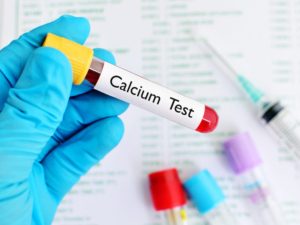
Is There a “Magic Number” for High Calcium?

One of the most common misunderstandings about high calcium is the idea that a slightly elevated calcium level means a patient has only a mild problem.

That is not a reliable way to think about primary hyperparathyroidism.

But first let’s clarify that we are talking about someone who has a PTH level that is inappropriately high for a given calcium level. This is what establishes a diagnosis of hyperparathyroidism. Many patients are told to simply “watch it for a while” when calcium is only modestly elevated on routine blood work. In some situations, careful follow-up may be part of the discussion. But a mildly elevated calcium level should not automatically be dismissed as unimportant.

When primary hyperparathyroidism is present, the calcium number by itself does not tell the whole story.

There Is No Single “Magic Number”

A common myth is that patients only need to worry when calcium rises above a certain number.

There is no single calcium level that defines how serious a patient’s hyperparathyroidism is. Calcium levels and parathyroid hormone levels can fluctuate. Some patients with proven parathyroid disease never have dramatically elevated calcium levels.

That matters because patients sometimes assume that if the number is not very high, the condition must not be significant. That is not always true.

Why “Mild” High Calcium Can Still Matter

Primary hyperparathyroidism should be evaluated based on the overall clinical picture, not just one lab value.

The evaluation and treatment decision depend on more than the highest calcium level. They depend on the pattern over time, the parathyroid hormone level, bone health, kidney stone history, symptoms, age, and other individual factors.

In other words, a lower calcium level does not necessarily mean a trivial problem.

What If You Do Not Notice Symptoms?

This is another area where patients can be misled.

Some people with hyperparathyroidism have obvious symptoms such as fatigue, poor sleep, body aches, bone pain, poor concentration, headaches, or depression. Others feel relatively well, or they attribute their symptoms to aging, stress, or another condition.

Some patients considered “asymptomatic” may actually have subtler symptoms that are easy to overlook.

That is one reason the absence of dramatic symptoms does not automatically rule out a meaningful problem.

Why Proper Evaluation Matters

The real concern is not whether a calcium level crosses some arbitrary line. The more important issue is whether a patient with persistent high calcium is being evaluated appropriately.

Over time, untreated primary hyperparathyroidism may contribute to problems such as:

  • osteoporosis
  • kidney stones
  • declining kidney function
  • hypertension
  • other long-term health effects

That does not mean every patient with a mildly elevated calcium level needs immediate surgery. It does mean the finding deserves thoughtful attention rather than casual dismissal.

The Bottom Line

If your calcium is high, the most important question is not whether it has reached a “magic number.”

The more important question is whether the finding could represent primary hyperparathyroidism and whether it has been evaluated carefully.

A calcium level that is only slightly elevated can still matter. The right next step is not to focus on one number alone, but to look at the whole picture.

This article is for general education only and is not personal medical advice. Individual recommendations depend on a patient’s full history, laboratory findings, and overall clinical situation.

Too Much of a Good Thing: The Truth About High Blood Calcium

Understanding Hypercalcemia: Causes, Symptoms, and Treatment

Hypercalcemia occurs when the level of calcium in the blood is too high—usually above 10.0 mg/dL. Calcium plays a key role in keeping bones strong, helping muscles work, and supporting nerve function. However, too much calcium in the bloodstream can interfere with these systems and lead to serious health problems.

The most common cause of hypercalcemia is a condition called primary hyperparathyroidism (PHPT). This happens when one or more of the parathyroid glands become overactive and produce too much parathyroid hormone (PTH). These small glands are located in the neck near the thyroid and help regulate calcium levels. When they produce too much PTH, calcium is pulled from the bones, absorbed more in the intestines, and lost less through urine—leading to high blood calcium levels.

Symptoms of Hypercalcemia:

  • Constant fatigue or muscle weakness
  • Kidney stones due to excess calcium being filtered
  • Bone pain or weakened bones, increasing fracture risk
  • Nausea, constipation, or appetite loss
  • Trouble with memory, focus, or mood

Best Treatment: Parathyroid Surgery

For most people with PHPT, parathyroid surgery is the only long-lasting solution. The procedure involves removing the overactive gland, which allows calcium levels to return to normal. At ParathyroidAtlanta, a minimally invasive surgery called MIRP (Minimally Invasive Radioguided Parathyroidectomy) is used to precisely remove the affected gland with a small incision, resulting in quicker recovery and fewer complications.

Life After Treatment

Patients usually feel better within days—less tired, fewer digestive problems, and improved focus. Most go home the same day and return to regular activities in less than a week.

Treating hypercalcemia early helps prevent long-term damage to bones, kidneys, and mental health.

Even a slightly elevated calcium can have a major impact on your health!

Here is a letter I recently received from a patient who had been suffering with typical symptoms of high calcium for about 4 years, with a calcium level that was “only” in the low 10’s. She recently underwent a simple outpatient operation to remove the overactive parathyroid gland and get her calcium and PTH back to normal.

“Dear Dr Kennedy,

I wanted to thank you again, for all of your help! I also wanted to give you a quick update on my progress!

My body seems to be healing by leaps and bounds since parathyroid surgery on xx/xx/23! I’m now OFF all 4 of my BP meds (I met with cardiologist yesterday).

My BP used to be in the 220/117 range (even with all the BP meds), and yesterday in his office it was 120/78 without taking any BP meds since November.

I’ve been able to stop my daily muscle relaxer /AND I’ve also cut back on pain meds for my lumbar spinal pain.

Chronic fatigue is improving daily!! A “normal day” for me before surgery was to struggle to get to work (and I work from home) by 9AM, and then I’d go right back to bed whenever I finished work. No hobbies, and I’d have to rest on all days off.Since surgery, now I have no problem getting to (and thru) my work days, I’m also studying Japanese again AND planning a ski trip to Japan in Winter 2025 plus I hope to make it to the Philippines to visit friends on the same trip! (I used to live in Japan, that’s where I learned to ski). I’ve also started hiking again and will try light mountain biking again this weekend. I’m also doing weights again on the days I’m not hiking! This is all just after 6 weeks or so….

I can’t wait to see the changes after 6 months! Mood problems (extreme anxiety and depression) haven’t been a problem since I healed from surgery.

I wanted to wish you and all of your loved ones a Merry Christmas, Happy New Year, and a wonderful holiday season!

Thank you again!

SD”

woman getting checked for hyperparathyroidism

Hyperparathyroidism: Important word to know if you have high calcium

Did you know that there’s an estimated 1-7 cases of hyperparathyroidism per every 1000 people? The Journal of Clinical Endocrinology & Metabolism reports that “Primary hyperparathyroidism (PHPT) is a relatively common endocrine disorder… It is believed to be the most common cause of hypercalcemia, predominantly affecting elderly populations and women two to three times as often as men.” (2013) Despite this statistic, many are unaware of the causes, effects, and cures for this condition. Continue below to see how you can be proactive about your parathyroid health. You might just find that your tendency to feel sluggish isn’t because of an imbalance of caffeine, but calcium. 

What Causes Hyperparathyroidism? 

Before we can dive into the symptoms and cures of hyperparathyroidism, it’s important to understand the parathyroid glands. The four parathyroid glands reside in your neck behind your thyroid. They are the only organs that we have four of and are responsible for drawing calcium into your bones and bloodstream when you need it. They also let calcium out of your body by pushing it through your kidneys daily. It seems like a small job, but your parathyroid affects many elements of your physical and mental health. When one or more of the parathyroid glands becomes overactive, it releases too much parathyroid hormone (PTH). The excess PTH draws in an unhealthy amount of calcium into your bloodstream. This condition can lead to anything from chronic fatigue, anxiety, memory loss, and depression to high blood pressure, kidney stones, and bone loss. Because of this, it’s very important that you’re aware of the symptoms to look out for. 

Symptoms

The symptoms of the unhealthy parathyroid gland(s) can be subtle and often go ignored. Many patients don’t realize they are suffering from hyperparathyroidism until they get the high calcium results from a routine blood test. Although sometimes high calcium (calcium above 10 mg/dl) is only temporary, an additional blood test should be taken to measure the Parathyroid Hormone (PTH) level. If the calcium and PTH tests are normal, then you do not have hyperparathyroidism, but you should stay updated on your calcium and PTH levels as a small change can lead to big differences in your well-being. If your calcium and PTH levels are high, you almost certainly have hyperparathyroidism. Almost all parathyroid patients have symptoms; as for the ones who don’t, they typically don’t realize they were suffering until it’s fixed. Everyone experiences different symptoms of Hyperparathyroidism. The most common are chronic fatigue, body aches, difficulty sleeping, bone pain, memory loss, poor concentration, depression, and headaches. Be consistently aware of the possible symptoms your parathyroid health could be causing. A small procedure just might end a lot of your suffering.

What Can I Do?

The good news about hyperparathyroidism is that there is a highly effective cure. Parathyroid Atlanta’s minimally invasive surgical techniques make recovery an easy process. What was once a life-threatening health problem can be removed with minimally invasive radio-guided parathyroidectomy (MIRP) surgical techniques. With MIRP, the operation occurs through about a one-inch-long incision, and it takes about 30-60 minutes. In most cases, the parathyroid gland that’s causing issues has been identified, but all four glands are still tested during the procedure. If any other glands are overactive, they are removed during the operation. If you believe you could be silently suffering from hyperthyroidism or want more information, please give our office a call. We would be more than happy to get you into our office so you can get on top of your parathyroid health. Don’t suffer in silence, get your calcium and PTH levels checked today.

dont lose your fastball

Hyperparathyroidism Can Affect Anyone — Even a Major League Pitcher!

Hyperparathyroidism is a disease that is underrecognized, underdiagnosed, and undertreated.  It is typically manifest as a slight elevation in your calcium level, and your doctor might even overlook it, maybe not even aware themselves of how big an impact that slight elevation in your calcium level may have. But the truth is, calcium impacts so many functions in the body, there are many symptoms that can occur, including a decreased energy level, tiredness during the day, muscle weakness, lack of concentration, or memory loss, bone pain, excessive thirst, perspiration, and urination, and the list goes on.

And so, Washington Nationals pitcher Jon Lester found himself with many of these symptoms that had been present for awhile, and he began worrying that his pitching career might be ending. 

Read more

My calcium level is high.

Does this statement describe your situation? “My calcium level is above the normal range. I asked my doctor and they said it’s nothing to worry about, and we can just keep an eye on it. Is that okay?”

Short answer, no, it’s not okay.

So why do some doctors not follow up on an elevated calcium level?

Read more