What’s All the Hype About Vitamin K2?

Vitamin K2 has been getting more attention lately in relation to hyperparathyroidism, calcium, and vitamin D supplements, especially in conversations about bone health and calcium metabolism. Interestingly, despite a growing amount of information available online, vitamin K2 still lives mostly in the background when it comes to mainstream, peer-reviewed medical literature.

There are a few reasons for that. One is practical: vitamin K2 is not patentable in any meaningful way, which means there is very little financial incentive for large pharmaceutical companies to fund expensive clinical trials. As a result, you won’t see vitamin K2 featured prominently in the major journals the way you might see a new drug or device.

Another issue is that we don’t have a clearly established recommended daily allowance (RDA) for vitamin K2. Different populations consume very different amounts through diet, and the research hasn’t yet settled on a single “correct” dose. Complicating matters further, there is no widely available, reliable blood test to measure vitamin K2 levels. That makes large-scale studies harder to design and interpret.

It’s also important to clarify a common point of confusion: vitamin K2 is not the same as vitamin K1. Vitamin K1 is primarily involved in blood clotting and is what most people think of when they hear “vitamin K.” Vitamin K2, on the other hand, plays a different role—helping direct calcium to where it belongs, particularly into bones and away from soft tissues. Because they share a name, the two are often lumped together, but functionally they are quite distinct.

In my own practice, I have been recommending the addition of vitamin K2 alongside calcium and vitamin D for many years, particularly in patients concerned about bone health and calcium balance. Only more recently have other parathyroid experts begun to publicly emphasize the same approach.

Based on the available evidence and clinical experience, my personal recommendation for vitamin K2 (MK-7) supplementation is 200–300 micrograms daily. While this is not an official guideline, it reflects what I believe to be a reasonable and safe range for most adults.

As with many nutritional supplements, vitamin K2 sits at the intersection of emerging science and clinical judgment. The absence of large trials does not mean it lacks value—it often means the system has little incentive to study it.

This information is educational and not a substitute for medical advice. Talk with your own clinician about your specific situation before starting any new supplement.
What if my scans are normal?

It is quite common for an endocrinologist to confirm a diagnosis of primary hyperparathyroidism with lab work and then order one or more scans to look for an abnormal gland. It is important to understand that it is not necessary to see an abnormal gland on imaging before an operation to know that you have primary hyperparathyroidism. But it seems that endocrinologists tend to want to “hedge their bets” before referring a patient for surgery. In addition, there are many surgeons who don’t feel comfortable considering surgery without having a scan that shows a single abnormal gland.

The most experienced parathyroid surgeons feel quite comfortable proceeding with surgery even if scans are normal. They know that if the lab work confirms the diagnosis, then they will be able to identify the abnormal gland or glands at surgery, regardless of the scan findings. The scans are quite helpful as a roadmap in preparation for surgery. But the imaging should not be the determining factor.

Why do scans sometimes look normal? Parathyroid glands are tiny and sit close to the thyroid. Normal glands are almost never seen, and a small overactive gland may blend in, or it may sit behind the thyroid or lower in the neck where it’s hard to see. Ultrasound is also operator-dependent: subtle findings can be missed by people who do not perform or read these tests often. An expert review can sometimes spot clues that others overlook. Although an abnormal parathyroid gland might not be seen on a sestamibi scan if it sits behind the thyroid (its usual location), it is hard to miss if it sits somewhere else. It is important for the surgeon to know if an abnormal gland is in an ectopic location, because those are the ones that might not be found even by an experienced surgeon. As long as the sestamibi scan doesn’t show an abnormal location for the parathyroid gland, the surgeon can confidently go ahead with surgery, even if the scan is read as normal.

Bottom line: Don’t delay treatment you need while waiting for a scan to “light up.” If your labs confirm primary hyperparathyroidism, talk with a surgeon who treats this every week and can walk you through cure rates, risks, and next steps for you.

This information is educational and not a substitute for medical advice. Talk with your own clinician about your situation.

“My Endocrinologist says I have primary hyperparathyroidism, but he wants to watch it and not refer me for surgery. Why is that?”

The history of parathyroid surgery is pretty interesting. It started over a century ago, long before we had the advanced testing we use today. Back then, there was no way to measure parathyroid hormone (PTH) levels—only serum calcium could be tested. Patients often showed up with severe bone disease or kidney stones. Without a PTH test, doctors had to rule out every other possible cause of high calcium before suspecting a parathyroid problem. Endocrinologists became the go-to specialists for sorting through all those possibilities. Only when every other cause was eliminated would they conclude an overactive parathyroid gland was to blame, and that’s when a surgeon got involved.

Fast forward to today, and things are much simpler. We have a quick blood test to check intact PTH levels. If you have four normal parathyroid glands, they won’t overproduce PTH just because your calcium is high for another reason. Now, the first step when calcium is elevated is to check PTH. If it’s not suppressed, the diagnosis of primary hyperparathyroidism can be made right away. In fact, if you’re generally healthy and your calcium is consistently high, chances are good that’s the issue—so it’s smart to check this first.

Still, many primary care doctors send patients with high calcium to an endocrinologist, and some endocrinologists keep running through all the old possible causes even when it’s unnecessary if the PTH is already too high. They might diagnose primary hyperparathyroidism but downplay it, telling the patient, “It’s not that bad, let’s just follow it”.

This likely comes from a time when parathyroid surgery wasn’t as safe or routine as it is today in skilled hands. They may not realize how symptomatic these patients can be, even when calcium and PTH levels aren’t “that high.” The truth is, parathyroid surgery is highly effective and very safe when performed by experienced surgeons. Most people with primary hyperparathyroidism have symptoms that can improve, often significantly, after a straightforward operation.

Maybe your endocrinologist ordered scans to locate an abnormal parathyroid gland, but they came back negative. So, what happens next? Stay tuned.

Too Much of a Good Thing: The Truth About High Blood Calcium

Understanding Hypercalcemia: Causes, Symptoms, and Treatment

Hypercalcemia occurs when the level of calcium in the blood is too high—usually above 10.0 mg/dL. Calcium plays a key role in keeping bones strong, helping muscles work, and supporting nerve function. However, too much calcium in the bloodstream can interfere with these systems and lead to serious health problems.

The most common cause of hypercalcemia is a condition called primary hyperparathyroidism (PHPT). This happens when one or more of the parathyroid glands become overactive and produce too much parathyroid hormone (PTH). These small glands are located in the neck near the thyroid and help regulate calcium levels. When they produce too much PTH, calcium is pulled from the bones, absorbed more in the intestines, and lost less through urine—leading to high blood calcium levels.

Symptoms of Hypercalcemia:

  • Constant fatigue or muscle weakness
  • Kidney stones due to excess calcium being filtered
  • Bone pain or weakened bones, increasing fracture risk
  • Nausea, constipation, or appetite loss
  • Trouble with memory, focus, or mood

Best Treatment: Parathyroid Surgery

For most people with PHPT, parathyroid surgery is the only long-lasting solution. The procedure involves removing the overactive gland, which allows calcium levels to return to normal. At ParathyroidAtlanta, a minimally invasive surgery called MIRP (Minimally Invasive Radioguided Parathyroidectomy) is used to precisely remove the affected gland with a small incision, resulting in quicker recovery and fewer complications.

Life After Treatment

Patients usually feel better within days—less tired, fewer digestive problems, and improved focus. Most go home the same day and return to regular activities in less than a week.

Treating hypercalcemia early helps prevent long-term damage to bones, kidneys, and mental health.

How Parathyroid Problems Can Cause Weak Bones

Your parathyroid glands help control how much calcium is in your blood and bones. If one or more of these glands makes too much hormone, it’s called hyperparathyroidism.

This hormone tells your bones to release calcium into your blood. Over time, your bones can lose too much calcium and become weak. This can lead to osteoporosis, which means your bones are more likely to break.

The hormone also makes your body lose calcium through urine. It can also stop your body from using vitamin D the right way. Without enough calcium and vitamin D, your bones can get even weaker.

The only way to fix this problem of excess parathyroid hormone is with parathyroid surgery. A doctor removes the gland or glands that are making too much hormone. This helps your calcium levels go back to normal and helps your bones stay strong. Bones can even regain strength over time after surgery.

But this surgery can be tricky. If the doctor doesn’t check all four parathyroid glands, the problem might not be fully fixed. And if too much is removed, you can get another problem called hypoparathyroidism, which is very hard to treat. That’s why it’s important to go to a doctor who does this surgery often.

Dr. Kennedy has decades of experience in parathyroid surgery, and routinely looks for all four glands, to be certain that all abnormal glands are found. The surgery is done as an outpatient, with a 98% success rate.

If you are diagnosed with hyperparathyroidism, there’s a sure and simple cure. With minimally invasive outpatient surgery  — one precise and tiny little incision — we can remove the overactive parathyroid gland, leaving behind the three healthy remaining glands.
The cure is almost always immediate.

Contact Us Today to Get Started on Your Diagnosis and Cure

The Review of Patient Records is Included in the Consult Fee; There is no Additional Charge

Even a slightly elevated calcium can have a major impact on your health!

Here is a letter I recently received from a patient who had been suffering with typical symptoms of high calcium for about 4 years, with a calcium level that was “only” in the low 10’s. She recently underwent a simple outpatient operation to remove the overactive parathyroid gland and get her calcium and PTH back to normal.

“Dear Dr Kennedy,

I wanted to thank you again, for all of your help! I also wanted to give you a quick update on my progress!

My body seems to be healing by leaps and bounds since parathyroid surgery on xx/xx/23! I’m now OFF all 4 of my BP meds (I met with cardiologist yesterday).

My BP used to be in the 220/117 range (even with all the BP meds), and yesterday in his office it was 120/78 without taking any BP meds since November.

I’ve been able to stop my daily muscle relaxer /AND I’ve also cut back on pain meds for my lumbar spinal pain.

Chronic fatigue is improving daily!! A “normal day” for me before surgery was to struggle to get to work (and I work from home) by 9AM, and then I’d go right back to bed whenever I finished work. No hobbies, and I’d have to rest on all days off.Since surgery, now I have no problem getting to (and thru) my work days, I’m also studying Japanese again AND planning a ski trip to Japan in Winter 2025 plus I hope to make it to the Philippines to visit friends on the same trip! (I used to live in Japan, that’s where I learned to ski). I’ve also started hiking again and will try light mountain biking again this weekend. I’m also doing weights again on the days I’m not hiking! This is all just after 6 weeks or so….

I can’t wait to see the changes after 6 months! Mood problems (extreme anxiety and depression) haven’t been a problem since I healed from surgery.

I wanted to wish you and all of your loved ones a Merry Christmas, Happy New Year, and a wonderful holiday season!

Thank you again!

SD”

woman getting checked for hyperparathyroidism

Hyperparathyroidism: Important word to know if you have high calcium

Did you know that there’s an estimated 1-7 cases of hyperparathyroidism per every 1000 people? The Journal of Clinical Endocrinology & Metabolism reports that “Primary hyperparathyroidism (PHPT) is a relatively common endocrine disorder… It is believed to be the most common cause of hypercalcemia, predominantly affecting elderly populations and women two to three times as often as men.” (2013) Despite this statistic, many are unaware of the causes, effects, and cures for this condition. Continue below to see how you can be proactive about your parathyroid health. You might just find that your tendency to feel sluggish isn’t because of an imbalance of caffeine, but calcium. 

What Causes Hyperparathyroidism? 

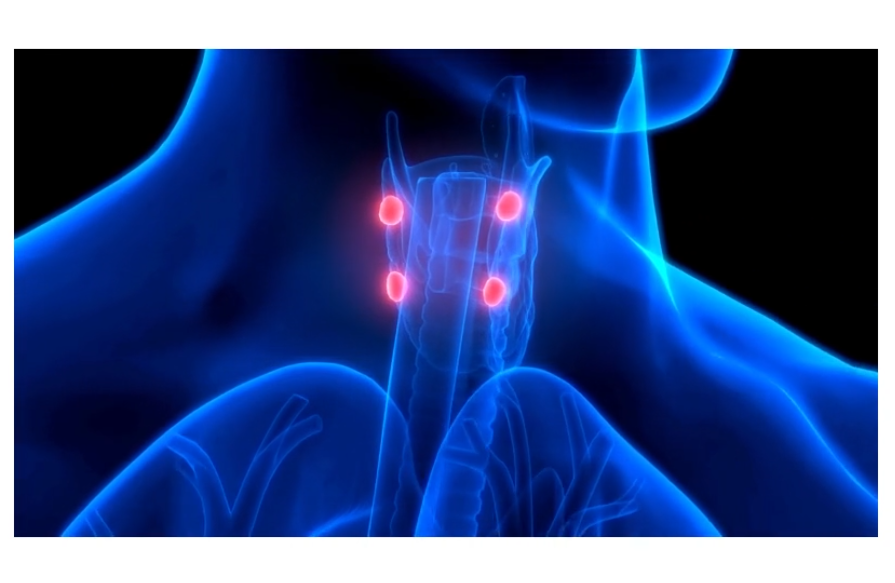
Before we can dive into the symptoms and cures of hyperparathyroidism, it’s important to understand the parathyroid glands. The four parathyroid glands reside in your neck behind your thyroid. They are the only organs that we have four of and are responsible for drawing calcium into your bones and bloodstream when you need it. They also let calcium out of your body by pushing it through your kidneys daily. It seems like a small job, but your parathyroid affects many elements of your physical and mental health. When one or more of the parathyroid glands becomes overactive, it releases too much parathyroid hormone (PTH). The excess PTH draws in an unhealthy amount of calcium into your bloodstream. This condition can lead to anything from chronic fatigue, anxiety, memory loss, and depression to high blood pressure, kidney stones, and bone loss. Because of this, it’s very important that you’re aware of the symptoms to look out for. 

Symptoms

The symptoms of the unhealthy parathyroid gland(s) can be subtle and often go ignored. Many patients don’t realize they are suffering from hyperparathyroidism until they get the high calcium results from a routine blood test. Although sometimes high calcium (calcium above 10 mg/dl) is only temporary, an additional blood test should be taken to measure the Parathyroid Hormone (PTH) level. If the calcium and PTH tests are normal, then you do not have hyperparathyroidism, but you should stay updated on your calcium and PTH levels as a small change can lead to big differences in your well-being. If your calcium and PTH levels are high, you almost certainly have hyperparathyroidism. Almost all parathyroid patients have symptoms; as for the ones who don’t, they typically don’t realize they were suffering until it’s fixed. Everyone experiences different symptoms of Hyperparathyroidism. The most common are chronic fatigue, body aches, difficulty sleeping, bone pain, memory loss, poor concentration, depression, and headaches. Be consistently aware of the possible symptoms your parathyroid health could be causing. A small procedure just might end a lot of your suffering.

What Can I Do?

The good news about hyperparathyroidism is that there is a highly effective cure. Parathyroid Atlanta’s minimally invasive surgical techniques make recovery an easy process. What was once a life-threatening health problem can be removed with minimally invasive radio-guided parathyroidectomy (MIRP) surgical techniques. With MIRP, the operation occurs through about a one-inch-long incision, and it takes about 30-60 minutes. In most cases, the parathyroid gland that’s causing issues has been identified, but all four glands are still tested during the procedure. If any other glands are overactive, they are removed during the operation. If you believe you could be silently suffering from hyperthyroidism or want more information, please give our office a call. We would be more than happy to get you into our office so you can get on top of your parathyroid health. Don’t suffer in silence, get your calcium and PTH levels checked today.

Your parathyroid glands only have ONE job.

I really think it’s interesting that the parathyroid is the only gland in our bodies that God had some reason to give us 4 of. In our bodies, no other gland or structure has as much duplication. Perhaps the fact that there are four of them has something to do with why one of them will occasionally go out of whack and start producing more hormone than it should. Your parathyroid glands only have one job: to keep your calcium levels normal. This is critical because calcium is required for the proper functioning of many metabolic pathways. This includes your nervous system, kidneys, bones, muscles, and other organs.

There are several reasons to choose an experienced surgeon for your parathyroidectomy. One being, parathyroids can be hard to find. They’re so small that doctors had no idea that parathyroid glands existed until about a century ago. They blend in with the background, and the skills required to perform a successful parathyroid operation are not learned with just a few cases under your belt. It takes hundreds of surgeries to master the art of parathyroid gland removal. A surgeon with little experience may find the abnormal gland and reduce your calcium, but studies have shown that surgeons with low volumes have a much higher percentage of patients who are not cured with the first operation. And if your operation fails, you’ll need a second one. Which will not only be an annoyance, but also cause an increase in difficulty level during removal. Therefore, it’s always a good idea to give the first operation your best shot. Do your research and find a doctor well suited for your needs. 

Another important thing to be aware of is finding a surgeon who cares. You only want to work with surgeons who have a passion for parathyroid surgery. For me, it’s fun. I love looking for parathyroid glands, it’s like finding buried treasure. And I have treated thousands of patients with the disease, each being a unique experience.  I take pride in my success rate being about 98%, I rarely perform a second parathyroidectomy. Remember, it’s worth it to travel to an experienced center to maximize the likelihood of success with your first and hopefully only operation. This shortens your road to recovery and alleviates the burden of possible suffering from Hyperparathyroidism symptoms in the future. 

If you’d like to become a patient or simply want more information, go to parathyroidatlanta.com or contact us by phone.  We have many patients who travel from out of town for their treatment. We can easily set up telehealth consultations in advance of planning surgery for you.  We do not charge any additional fees for reviewing your medical information prior to a consultation.

“I Have My Life Back!”

Hyperparathyroidism can steal your quality of life.  My mother was diagnosed with hyperparathyroidism 4 years ago and has spiraled downhill since.  She was told to stay hydrated and that would control her serum calcium level because she was not a candidate for surgery.  As time went on, my (now) 90-year-old mother was slowly losing her will to live.  She would on some days stay in bed for 22 hours.  Her family watched her withering away and could not figure out what was going on.  After a neurology visit for dementia evaluation, the family was told that her problem was not neurological.  She had aging short-term memory loss.  We then went to the cardiologist thinking that this lack of will to live and deterioration of our precious mother was valvular related.  He said no and sent her to another neurologist for consult.  She was then diagnosed with mild impaired cognitive function and depression.  My mother could no longer take care of herself literally.  She could no longer cook and did not even have the energy to get dressed most days.  All she wanted to do was stay in bed.  If she wasn’t laying down, she complained of her back hurting.  She would get a telephone call and could not remember what was discussed seconds after the call ended.  Again, we could not understand it. 

A lady that lived down the street had a daughter who had hyperparathyroidism and started talking about her daughter‘s symptoms and her upcoming surgery with Dr. John Kennedy.  A bell literally went off and I thought she was talking about my mother.  She put me in touch with her daughter and after talking to her I knew we had to get my mom help even at 90 years old.  We met with Dr. Kennedy and begged him to consider my mother for surgery.  He is an amazing person first of all and makes you feel like part of his family.  His office staff is nothing short of amazing too.  After he reviewed the information and test results of my mother, he met with her and said that he would do the surgery.  It was worth the risk to my mother as she was already dying a slow and painful death as we watched her helplessly until we met Dr. Kennedy. 

On January 25, 2022, my mother had a large parathyroid gland removed.  She has done amazing, and the surgery was a success.  The day she had her surgery, we could already tell a difference in her cognition.  She could remember things that were going on around her.  She even looked 10 years younger, and her eyes were sparkling again.  It was nothing short of a miracle!  7 days out of surgery and I got my mom back!  She is smiling, laughing, getting dressed every day, participating in conversation, initiating conversation, moving around with a purpose, eating better, she is happy, and her energy level has skyrocketed!  Her words today, “I have turned a page and I feel like I have my life back”.  Thank you, Dr. Kennedy, for your dedication, skill, knowledge, and superb care of my mother. You are a remarkable doctor and human being!  Forever grateful sir! 

Sincerely, 

Karen  

Parathyroidectomy and Osteoporosis- It Makes a Difference!


This week I received an email from a patient who underwent successful parathyroid surgery about 2 years ago. Her case was interesting in a number of ways, but especially because she had known for over 10 years that her calcium was slightly elevated, and her physicians had told her they would continue to “just watch it”. During that time frame, her bone density gradually deteriorated to the point that she had frank osteoporosis, only in her early 60’s. This was especially distressing to her, as she worked in physical education. In addition to the osteoporosis, she was finding herself more and more exhausted with less and less activity. She decided to investigate on her own about causes of high calcium, and it was then she referred herself to me.

Read more